WhatsApp may upgrade two-step verification with a password
WhatsApp plans to replace the current PIN used for two-step verification with an account password. This change would make the verification process more robust, since a password can include both letters and numbers. The update targets a security layer that WhatsApp never updated since its introduction.
| Key Points | Details |
|---|---|
| Feature: | Account password for two-step verification |
| Status: | Under development |
| Availability info: | This feature is currently in development and not yet available for beta testing. You can read this article for a sneak peek. |
| Previous news: | WhatsApp shares new updates for iPad, CarPlay, Music, and PDF! |
WhatsApp was developing an account password feature on Android
In the post about the WhatsApp beta for Android 2.26.7.8 update, we announced a feature that secures accounts with a password. WhatsApp planned to add a password on top of the existing two-step verification as another layer of security. The password had to be between 6 and 20 characters and include at least one letter and one number. At that time, WhatsApp had not yet decided how this password would interact with two-step verification.
WhatsApp is now working on replacing the PIN with a password
The direction has shifted since that first report. Instead of adding a password on top of the existing PIN, WhatsApp is now working on replacing the PIN altogether. We discovered this with the WhatsApp beta for Android 2.26.29.4 update, available on the Google Play Store. Specifically, WhatsApp is developing a feature that would allow users to replace the two-step verification PIN with a password.
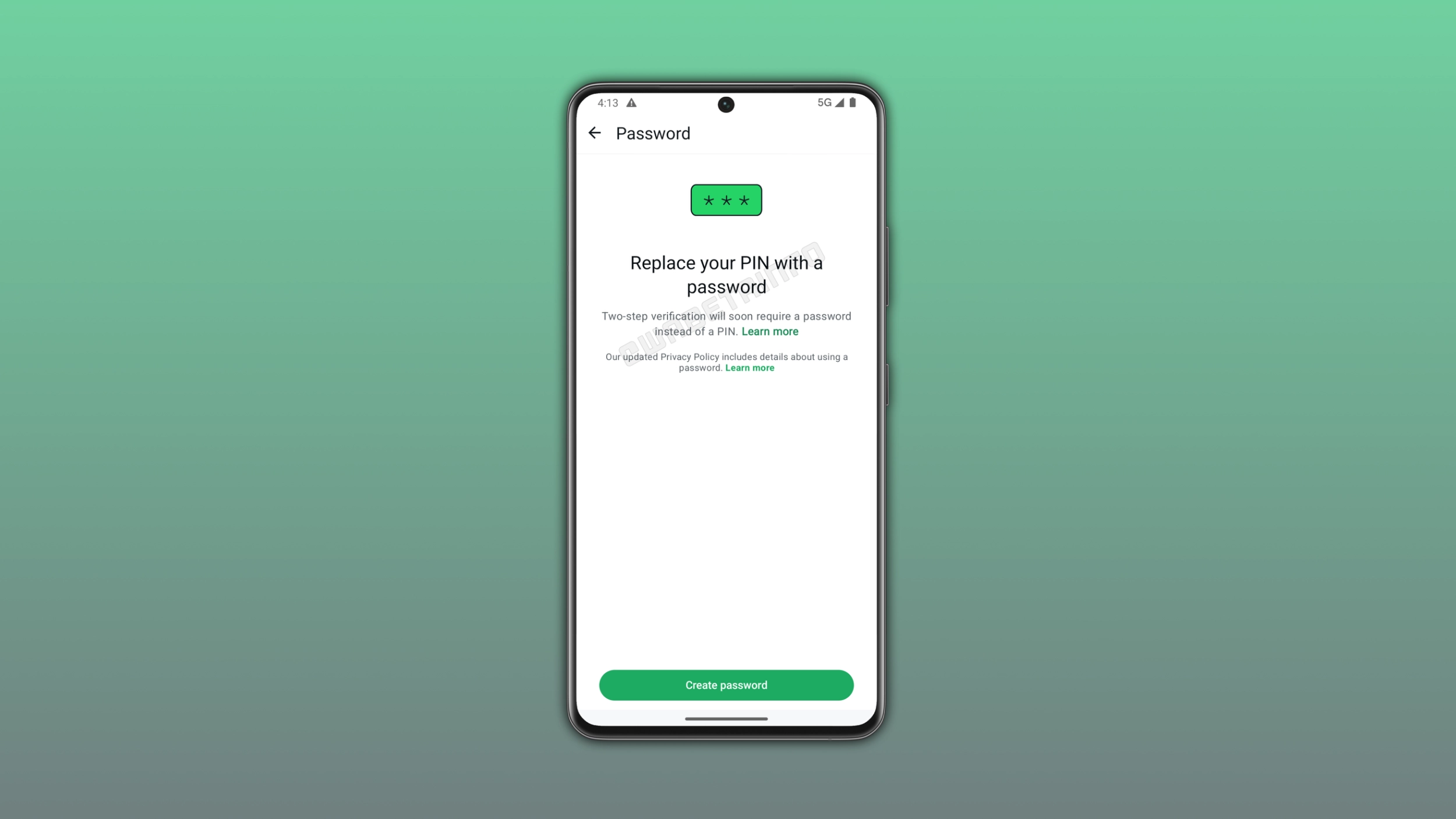
What the difference is between a PIN and a password
Two-step verification on WhatsApp currently uses a 6-digit numeric PIN. On the other hand, a password can include both letters and numbers, and it can be significantly longer. This would give users far more combinations to choose when they want to secure their account. A PIN that uses only numbers has a limited number of possible values. Instead, a password with mixed characters is far less predictable by nature.
Why a password for two-step verification is harder to guess than a PIN
A numeric PIN can only use digits, which limits how many combinations are possible. A password with letters and numbers has far more possible combinations, which makes it stronger as a security code. Even in the unlikely event that someone made it through the SMS verification code, a password is simply more difficult to figure out than a numeric PIN. The more complex the password, the better it holds up as a second line of defense.
What this means for existing two-step verification users
Users who already have two-step verification enabled with a PIN can update their security code when this change rolls out. WhatsApp has not confirmed exactly how the transition will work. It is possible that WhatsApp will notify users to replace their PIN with a password at some point. WhatsApp will likely guide users through the process step by step.
Two-step verification remains optional
Nothing about this change makes two-step verification mandatory. Users who prefer not to set it up can continue without it, just as they always could. The change will only affect how the verification code works for users who choose to enable it. The password will simply replace the PIN as the method of choice, without changing the structure of how two-step verification works on WhatsApp.
WhatsApp has not confirmed any plans for this change yet
The feature is still in a very early stage of development, and WhatsApp has not confirmed anything about its release. What we discovered in the latest beta version gives a hint, but that direction could change at any time. WhatsApp may decide to go ahead with a password as a full replacement for the PIN. However, WhatsApp may also drop the idea altogether. Only time will tell which path WhatsApp takes.
WhatsApp is still developing the account password feature for Android
The account password feature for two-step verification is currently under development on Android. WhatsApp has not enabled it for beta testers yet. The message spotted in the latest beta suggests WhatsApp is moving in this direction, but the final implementation could still change before any public release. WhatsApp has not announced when this feature will be available.
Connect with WABetaInfo
Follow WABetaInfo on X and visit our About page to learn more about what we do. We always appreciate your feedback on posts like this one.