The European Commission has ordered Meta to grant free access to the WhatsApp Business API for competing AI assistants. The decision comes after months of investigation into whether Meta violated EU antitrust rules by blocking third-party AI providers from WhatsApp.
| Key Points | Details |
|---|---|
| Story about: | EU Antitrust action against Meta |
| What happened: | The European Commission has imposed interim measures that require Meta to grant free WhatsApp access to rival AI assistants during its ongoing antitrust investigation. |
| Deadline for Meta: | Meta must comply within five working days. |
| Previous news: | WhatsApp catches NSO Group violating court order! |
Meta blocked rival AI assistants from WhatsApp
In October 2025, Meta updated its WhatsApp Business Solution Terms. The update prevents third-party AI assistants from accessing the WhatsApp Business API. The policy came into effect in January 2026, making Meta AI the only assistant to access the WhatsApp Business API. Developers and competition regulators in Europe raised concerns almost immediately. For example, the Interaction Company, French startup Agentik, and a Spanish competitor were the first to raise concerns. These complaints pushed the European Commission to open a formal investigation in December 2025.
How rival AI providers reacted
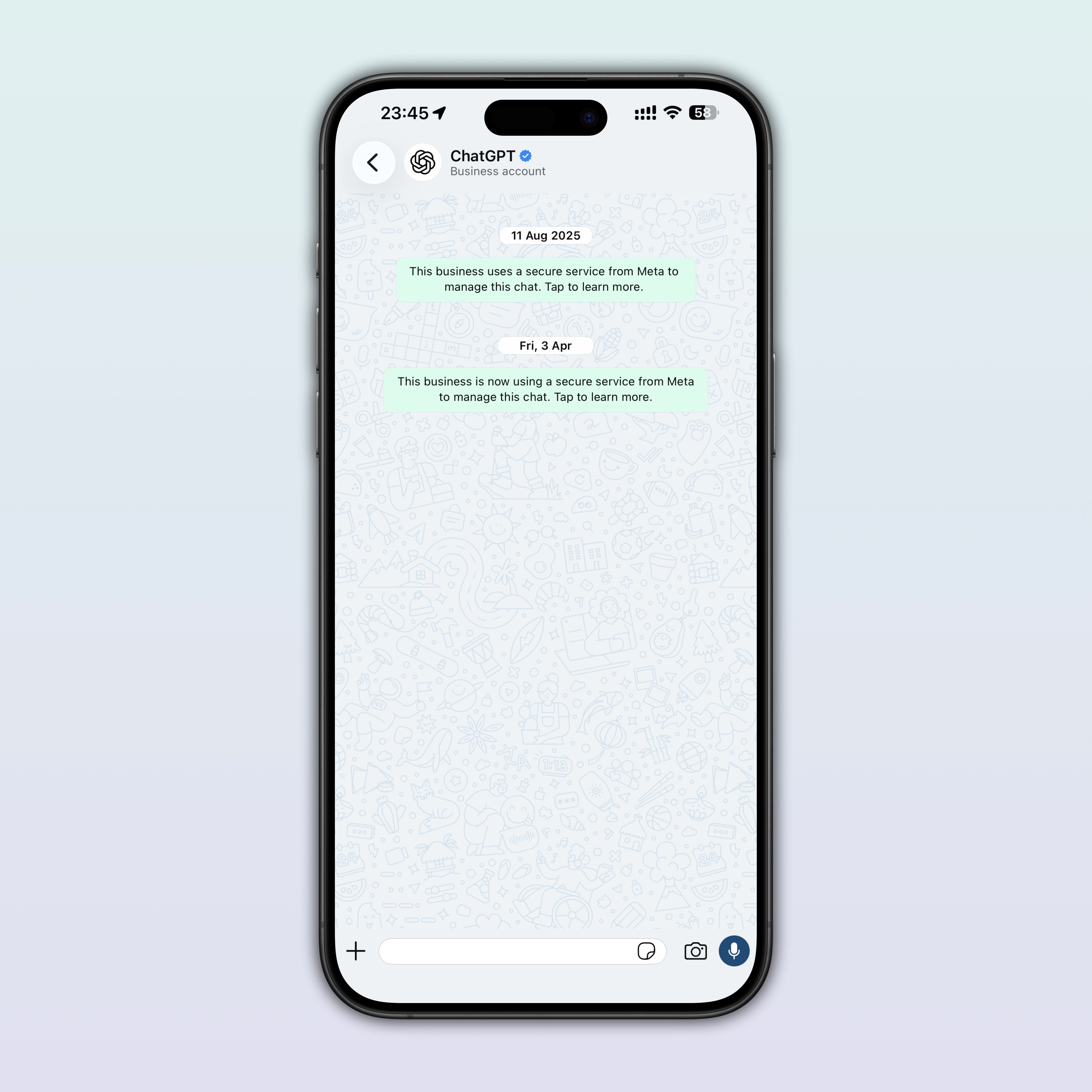
When the policy came into effect in January 2026, the impact on competing AI providers was immediate. In October 2025 OpenAI directed its WhatsApp users to the ChatGPT app, noting that over 50 million people had used the service on WhatsApp. In November, Microsoft announced that Copilot on WhatsApp would also shut down due to Meta's policy change. Both companies made clear they would have preferred to continue operating on WhatsApp. The new order now reopens the door for these providers, but neither has confirmed plans to return to WhatsApp yet.
The EU launched a formal antitrust investigation
In February 2026, the European Commission issued a Statement of Objections. Its preliminary investigation outlined that Meta had breached EU antitrust rules. The Commission argued that Meta was using its dominant position to give its own AI assistant a competitive advantage over other third-party providers. In March 2026, Meta revised its policy and reopened WhatsApp to third-party AI assistants. However, the new policy introduced a fee that the Commission determined to be a barrier to fair competition among AI providers. In April 2026, the Commission issued a supplementary Statement of Objections to act against Meta.
The EU imposed interim measures for the first time in 17 years
The European Commission has now formally imposed interim measures on Meta, a tool it has not used in 17 years. These measures require Meta to grant free access to WhatsApp for competing AI assistants within five working days. According to the European Commission, Meta must maintain that access for the entire duration of the antitrust investigation. The Commission pointed out that in markets as fast-moving as AI, a final ruling often comes too late to reverse the damage to competition. Teresa Ribera, the EU Commissioner for Competition, said these measures help prevent risks that would be almost impossible to repair later.
What the decision means for WhatsApp
At the heart of the dispute is the WhatsApp Business API, a service that businesses use to communicate with their customers and connect third-party tools. While this API is a paid product, the Commission determined that requiring competing AI providers to pay for access gives Meta an unfair structural advantage. Instead, Meta AI benefits from it for free. This may constitute a potential abuse of dominant market position under EU competition law. If the investigation concludes against Meta, the company could face fines of up to 10% of its global annual revenue.
Meta disagrees and will appeal
Meta pushed back strongly against the decision. The company argued that the European Commission was forcing it to offer its paid WhatsApp Business product for free to some of the largest technology companies in the world, including OpenAI. Meta noted that it is forced to offer a paid product for free, while other European businesses pay to access the WhatsApp Business API. As a result, Meta has announced it will appeal the decision. The dispute between Meta and Brussels over competition law in the AI sector is far from over.
What happens next
The interim measures will remain in place until the European Commission concludes its antitrust investigation. The investigation will determine if Meta permanently violated EU competition rules and whether regulators should impose additional sanctions. Tech industries are following this case with attention, since the final outcome could change how Europe can regulate AI distribution. For WhatsApp users, the decision has no direct impact on the messaging experience, but it shapes the competitive landscape of AI assistants that may be available on the platform in the future.
Connect with WABetaInfo
Follow WABetaInfo on X and visit our About page to learn more about what we do. We always appreciate your feedback on posts like this one.